
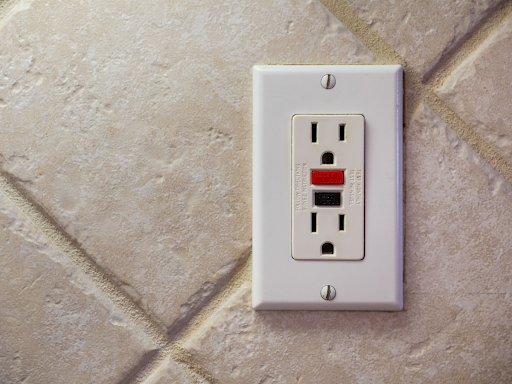
Where Is a GFCI-Protected Outlet Required in Your Home?
You don’t need to be an electrician to know that water and electricity don’t mix. That doesn’t stop the fact that certain areas of your home need to have electrical outlets and water sources nearby, which could cause potential problems if you aren’t careful. That’s where GFCI outlets come into play. These outlets quietly work behind the scenes to keep your home from turning into a fuse-popping, wire-frying, shock-happy hazard zone. When the ampere surges or moisture hits a power line, this little outlet hits the reset button to stop the danger in its tracks.
Whether you’re brushing your teeth near the bathroom sink, throwing a load of laundry in, or grilling out on the patio with the ceiling fan overhead and the microwave oven humming, they are your first line of defense against any unseen electrical problems. Knowing where they’re needed could mean the difference between flipping a breaker and replacing damaged electronics or dealing with injury. When you want to upgrade your home’s electrical system, here’s everything you need to know about GFCI outlets and which rooms make the most sense for your property!
What is a GFCI Outlet?
A GFCI (Ground Fault Circuit Interrupter) outlet monitors the flow of electricity in your home in real time. If it detects even a sliver of current leaking to the ground — like through water, metal, or you — it shuts off the power instantly. You don’t have to deal with a blown fuse or any sparked fires; it’s just a clean cutoff that keeps your electrical system safe. Think of it like a watchdog for voltage, standing guard at the points in your home where electricity and water live a little too close for comfort— like a kitchen countertop or basement floor.
Rooms Where You Should Have a GFCI Outlet
If you’re looking to upgrade your electrical system, GFCI outlets represent a sensible upgrade that can protect your spaces that encounter moisture, water, or other liquids on a regular basis. Knowing where these outlets make the most sense for your property helps you make more informed home improvement decisions and allows your electrical wiring to work as intended for the long haul. Here are the rooms where you should have a GFCI outlet installed:
Kitchens
From cooking up dinner to running the dishwasher, the kitchen stays busy. Water splashes from the sink, copper pipes under cabinets, and appliances that draw serious wattage. GFCI outlets are necessary around the countertop, near the faucet, or near that trusty old coffee maker. You’ll protect your electronics and avoid the kind of electrical fault that can short out your fridge or zap you while grabbing a snack.
Garages
The garage isn’t just where your can or truck rests. It’s a machine room with power tools, a battery charger or two, a welding setup, and maybe even an amplifier for weekend jam sessions taking up space. Add in moisture, metal, and concrete, and you’ve got a breeding ground for arc fault risk that strikes when you least expect it. GFCI outlets help mitigate the risks and keep your garage safe from electrical mishaps. These outlets stop power at the first sign of trouble, even when you’re mid-drill or tightening a screw with a little too much gusto.
Basements
Dark, damp, and often forgotten until there’s a problem, basements are a haven for mold, corrosion, and the potential for electrical issues. You’ve got sump pumps, lighting, dehumidifiers, and sometimes even plumbing fixtures in the mix that could be exposed to water. These potential electrical hazards can quickly become emergencies if you aren’t careful with moisture exposure with your outlets. Installing GFCI outlets down here helps keep that ground wire from becoming a real-world threat. Whether you’re storing paint or rewiring your basement ceiling lights, don’t skip this upgrade.
Laundry Rooms
Water meets electricity here more often than anywhere else. The washing machine, the sink, the water heater, and even the air conditioning unit’s drain line all contribute to a space that stays damp more often than dry. A GFCI outlet protects every appliance and tool from damage caused by water and electrical wear. When you’re sorting socks or troubleshooting that spin cycle that sounds like a truck, don’t forget what’s quietly protecting your house from a full-blown electrical hazard.
Why You Should Get the Professionals to Upgrade Your Outlets
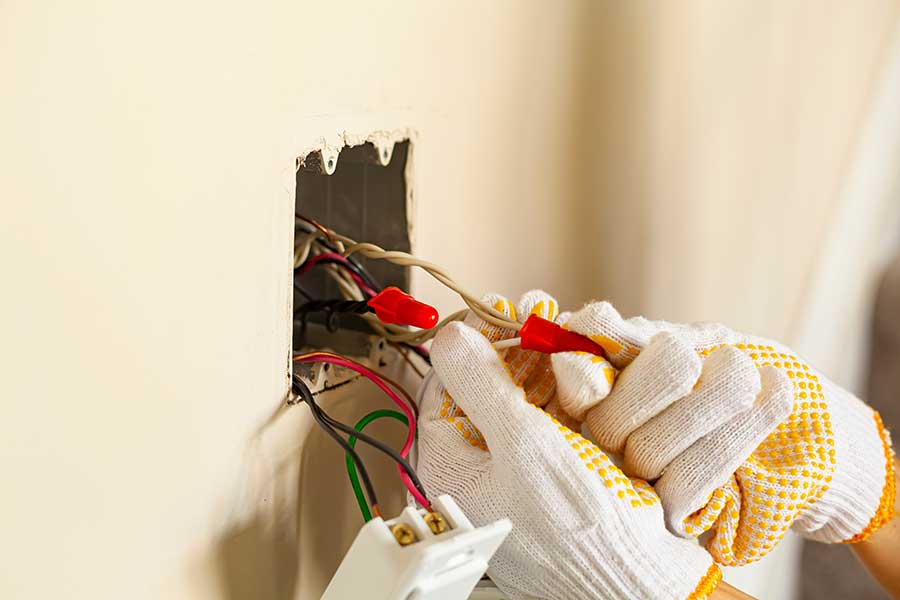
Regarding wiring and outlet upgrades, DIY might seem like a fun weekend project until you’re staring at a burnt wire, a popped fuse, or, worse, a smoking wall. Electrical work demands precision, experience, and the right tools, not just a power strip, a screwdriver, and a dream to get done right. Our professionals assess your entire system, including the voltage, the frequency, the condition of your copper or aluminum wiring, and even the ground faults that hide behind walls and under floorboards. Electricity isn’t forgiving; one mistake can put your home, electronics, and family at serious risk. Here’s what you get when you hire a licensed electrician for wiring and outlet upgrades:
Our expertly trained electricians know how to get your new GFCI outlets installed and integrated into your existing electrical wiring system so it stays up to code and keeps your appliances safe. We work with you to figure out the optimal layout and make sure your home can handle whatever electrical problems can arise.
Schedule Your Next Outlet Service With Handyside Today
If you’ve got a room that hums with electricity, you’ve got a room that needs attention. Everything depends on secure, code-compliant power, from kitchen ceiling fans to basement carbon monoxide detectors. And if you’re unsure about what’s protected or what should be, our experts can give your setup a full inspection that digs into the details. At Handyside, we keep electricity in its lane so your family, electronics, and peace of mind stay where they belong.
.jpg)
.jpg)
4.97 out of 485 reviews

Other pages you may be interested in...

What
Our Customers
Are Saying About Us
Our Customers
Are Saying About Us
We had a great experience with Handyside, and more
importantly our service tech - John McLean was the
best.

I decided to go with Handyside after reaching out to my normal
HVAC company and not getting a response back. I am
10,000% happy!
This was the best service appointment we’ve had with
any company in some time.




Ask for a Quote Today!
We focus on giving every customer an exceptional experience by prioritizing reliable and transparent service. Reach out today to schedule your appointment.
- Boiling Springs
- Camp Hill
- Carlisle
- Dallastown
- Dillsburg
- Dover
- East Hempfield Township
- East Petersburg
- East York
- Elizabethtown
- Etters
- Hanover
- Harrisburg
- Hershey
- Hummelstown
- Landisville
- Lewisberry
- Linglestown
- Lititz
- Lower Allen
- Manheim
- Mechanicsburg
- Mount Joy
- Mountville
- New Cumberland
- Palmyra
- Spring Grove
- West York